


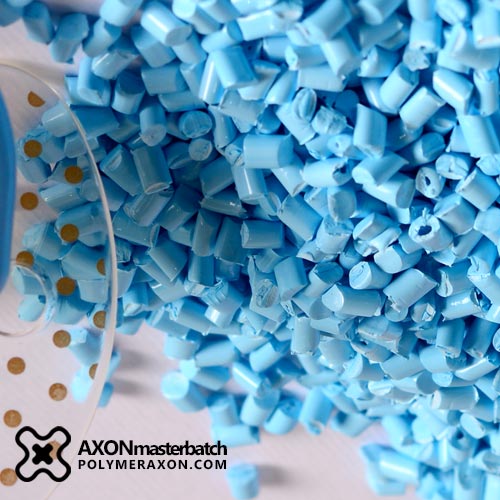
Blue masterbatch is one of the most widely used color masterbatches in the plastics industry. It is used to produce plastic products in different shades of blue, from sky blue and turquoise to carbon blue and navy blue.
The type of pigment, coloring strength, coverage, and resistance to light and heat are among the main factors that affect the quality and price of blue masterbatch. In this article, we explain how blue masterbatch is produced, the pigments used in its formulation, different blue shades, and the factors that affect its quality and price.
What Is a Blue Masterbatch and How Is It Produced?
Blue masterbatch is made by combining blue pigments with a carrier resin such as polyethylene or polypropylene and other required additives.
These materials are mixed and heated in an extruder until the pigment particles are evenly dispersed throughout the molten polymer. The mixture is then cooled and cut into granules.
The type and concentration of blue pigment play an important role in determining the final shade, coloring strength, and coverage of the masterbatch.
Types of Pigments Used in Blue Masterbatch
Blue pigments used in masterbatch production are generally divided into organic and inorganic pigments. They differ in coloring strength, undertone, and stability.
The most commonly used blue pigments include:
– Phthalocyanine blue as an organic pigment
– Ultramarine blue and cobalt blue as inorganic pigments
Phthalocyanine Blue Pigment
Phthalocyanine Blue (PB15) is one of the most common pigments used to produce blue masterbatch. This organic pigment has high coloring strength, good stability, and can be used to produce a wide range of blue shades.
Two commonly used types of Phthalocyanine Blue are:
- PB15:1: It has a reddish undertone and is suitable for producing certain deep and carbon blue shades.
- PB15:3: It has a greenish undertone and is commonly used to produce cooler blue and turquoise shades.
The difference in the crystal structure of these two pigments creates their different undertones.
Ultramarine Blue Pigment
Ultramarine Blue (PB29) is an inorganic pigment with a violet-blue undertone. It generally has lower coloring strength than Phthalocyanine Blue and is often used to produce specific blue shades or adjust the undertone of a formulation.
This pigment has good resistance to light and heat but is sensitive to acidic environments.
Cobalt Blue Pigment
Cobalt Blue (PB28) is an inorganic pigment with high resistance to heat and light.
Because of its higher cost and different coloring properties, it is less commonly used in general-purpose blue masterbatches. It is mainly used in specialized formulations where higher stability or specific color properties are required.
Types Based on Color Shade
Blue masterbatches are available in many different shades. The final shade depends on the type of pigment, the combination of pigments, and their concentration.
Sky Blue Masterbatch
Sky blue masterbatch is usually produced by reducing the intensity of the blue color and adding a white pigment such as titanium dioxide.
The ratio of white pigment to blue pigment determines the brightness and coverage of the final color.
Turquoise Blue Masterbatch
Turquoise blue has a greenish undertone. PB15:3 is commonly used to produce this shade. If necessary, a controlled amount of green pigment can also be added to achieve the required turquoise color.
Carbon Blue Masterbatch
Carbon blue is a deep blue shade. It is produced by selecting the appropriate blue pigment and adjusting its concentration according to the required color.
Navy Blue Masterbatch
Navy blue masterbatch is usually produced by combining blue pigment with a specific amount of black pigment or another complementary colorant.
The thickness of the plastic product can also affect the appearance of navy blue. Thin plastic parts may appear lighter than thicker parts even when the same masterbatch is used.
What Factors Affect the Final Blue Color in Plastic Products?
The same blue masterbatch may produce a different color or appearance when used in different plastic products. Four main factors can affect the final result.
1. Type of Plastic Raw Material
Different polymers such as polyethylene, polypropylene, and polystyrene have different levels of transparency, base color, and optical properties. Therefore, the same blue masterbatch may look different in each polymer.
For example, assuming that the formulation is compatible with both polymers, the same navy blue formulation may appear more opaque in polypropylene while having a more transparent appearance in clear polystyrene.
The polymer grade and thickness of the finished product can also affect the final color.
2. Poor Pigment Dispersion
If the pigment particles are not properly dispersed in the plastic material, dark or light spots and color streaks may appear on the finished product.
Good pigment dispersion helps produce a more uniform and consistent blue color.
3. Quality and Color of Raw Materials
Recycled materials, polymers with different base colors, or raw materials containing impurities can change the final color of the product.
Depending on the raw material, the blue color may shift toward green, violet, or gray.
4. Production Conditions
Processing temperature, masterbatch dosage, and product thickness can affect the intensity and appearance of the final color.
Changes in these conditions may also result in color differences between different production batches.
To achieve a consistent blue color, manufacturers should keep the raw materials, masterbatch dosage, and production conditions as stable as possible.
What Factors Affect the Blue Masterbatch Price?
The blue masterbatch price depends on the type of pigment, pigment concentration, production quality, and the properties required for the final product.
For this reason, two blue masterbatches with a similar shade may have different prices.
The main factors affecting the price include:
- Type of pigment: Phthalocyanine, Ultramarine, and Cobalt pigments have different prices. Specialized pigment grades are usually more expensive.
- Pigment concentration: A higher pigment concentration can increase the price per kilogram of masterbatch. However, a more concentrated masterbatch may require a lower dosage during production.
- Color shade:Custom colors with specific undertones or formulations containing several pigments may have higher production costs.
- Dispersion quality:Achieving uniform pigment dispersion and minimum color streaking requires proper processing and quality control.
- Special additives: Requirements such as light resistance, heat stability, or suitability for food contact applications can affect the final price.
- Raw material prices and order quantity: Changes in pigment and carrier resin prices, exchange rates, and order volume can also affect the blue masterbatch price.
Is a Cheaper Blue Masterbatch Always More Cost-Effective?
When comparing blue masterbatch prices, the price per kilogram should not be the only factor considered.
Some blue masterbatches may have a higher price but also offer greater coloring strength. As a result, a lower percentage of masterbatch may be required to achieve the desired color.
Therefore, masterbatch dosage, color consistency, and the quality of the finished plastic product should also be considered when comparing the actual cost of different blue masterbatches.


Reviews
There are no reviews yet.