


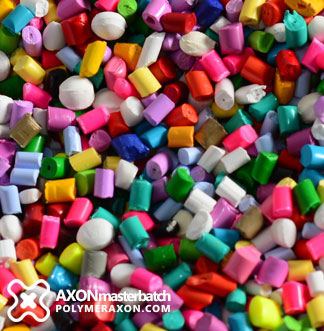
you may have heard of the term “masterbatch,” but you are unsure what it is. this article overviews masterbatch and its applications in the plastics industry.
- what is masterbatch ?
- what is the masterbatch production process?
- what are the benefits of a masterbatch?
- why do we use a masterbatch?
- what are the applications of a masterbatch?

what is masterbatch ?
simply put, a masterbatch is a solid plastic additive used to color or impart specific properties to plastics. however, a complete understanding of the masterbatch requires a more detailed explanation.
this article is for you if you are involved in the plastics industry through your work or studies. here, we explore its definition, types, common uses, and an overview of this critical material.
a masterbatch is a concentrated blend of pigments and other additives dispersed in a polymer carrier. it is made through a high-shear mixing process in a heated extruder. after cooling, the mixture is converted into granules using a pelletizer device.
the masterbatch allows the processor to color the raw polymer at an economically low-cost during plastic manufacturing. a masterbatch can also be defined as a granular color or pigment concentrate used to color thermoplastics. this material consists of one or more colorants and a carrier resin explicitly designed for the polymer.
the masterbatch is known as composite or calcite in the plastics industry. a masterbatch is an export commodity that is in high demand worldwide.
masterbatch ingredients
masterbatch ingredients significantly affect its final quality; therefore, we must first recognize what a masterbatch is and how it is formed. in a masterbatch, the pigment and other additives are optimally combined within a carrier material. this carrier or base is compatible with the molded leading plastic, which can be in granule or powder form.
the base material is typically one of the following:
- polyethylene
- polypropylene
- polystyrene
- polycarbonate
- polyamide

masterbatch formulation
the formulation of a masterbatch refers to the variables and components affecting its production. the base polymer (the polymer type) and pigments (specific percentages, amounts, and strengths) are two of the most critical ingredients. in addition to these two key ingredients, other additives are used in the masterbatch manufacturing process.
it is important to note that a wide range of color masterbatches can be created using a variety of colors. the masterbatch formulation and final consumption percentage vary with the final color.
the ultimate quality is ensured by selecting a pigment appropriate for the type of base polymer and the masterbatch production process and using the optimal production process to achieve complete pigment dispersion and distribution in the base polymer texture.
what is the masterbatch production process?
a masterbatch is produced in two ways: based on existing standards or the needs and standards defined by the customer. however, the general process to produce a masterbatch involves the following steps:
- identification and weighing of the required pigments and/or additives
- blending these pigments and/or additives into a carrier resin or polymer using a twin-screw extruder with heat treatment
- cooling and shaping the concentrated mixture into granules, powder, or other masterbatch forms
- packaging of the product.
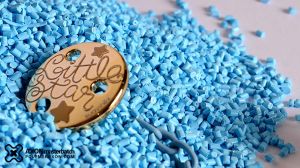
steps of masterbatch production
masterbatch production typically has three essential stages, as introduced below.
- premix
- split feed
- color matching
what is meant by premixing in the masterbatch production process?
this step necessitates a distribution that guarantees a homogeneous mixture of pigment, dispersing agent, and polymer formulation. below, we outline the differences between hot and cold premixing.
cold premixing specifically yields a homogeneous mixture; hot premixing generates enough frictional energy to induce melt dispersion and initiate pigment wetting, resulting in improved dispersion.
what are the benefits of a masterbatch?
raw pigment may be an alternative to a masterbatch in industries as they may fulfill the same purpose. however, the masterbatch provides benefits that make it more advantageous than the use of raw pigments, which we will detail below:
- using a masterbatch improves color transparency, which is the primary advantage of masterbatches over raw pigments. a masterbatch has more control and precision over the opacity and transparency of plastic colors.
- the masterbatch includes additives in predetermined ratios, which means there is minimal potential for variance during the production process.
- masterbatches provide superior color consistency for users in large-scale orders.
- improved melt processes are achieved in the case of masterbatches because the coupling agents are compatible with the employed polymers.
- masterbatches do not contaminate the surrounding environment or production lines. raw pigments can become airborne during processing, potentially contaminating other production lines. this problem is absent with masterbatches.
why do we use a masterbatch?
there are several points associated with this question, including:
- increased productivity: masterbatches can boost volumetric output—the increase in efficiency results from thermal conductivity and volumetric expansion up to temperature.
- cost savings: masterbatches contain a high percentage of caco3 powder. it allows manufacturers to run their devices with less energy consumption, significantly lowering production costs.
- enhanced plastic quality and properties: masterbatches enhance certain properties in plastics, including flexural rigidity, toughness, printability, and adhesion.
what are the applications of a masterbatch?
masterbatches are used in various products, including thermal sheets, polyester yarn, nylon yarn, molding, laminated film, pp nonwoven fabric, and many more.
the plastics and coloring industries rely heavily on masterbatches. this industrial/chemical product is considered a revolution in the polymer industry, as it has contributed significantly to increased productivity and lower plastic production costs.
what are the defining features of a premium-grade masterbatch?
masterbatch quality typically depends on three key factors: hygiene, concentration, and packaging. optimal masterbatch quality is achieved by carefully addressing each of these.
- hygiene: hygiene becomes paramount when using masterbatches for culinary or cosmetic packaging. modern techniques like nanocide additives ensure hygienic production.
- concentration: pigment concentration directly impacts quality. higher pigment concentrations result in a superior final product.
- packaging: packaging should block sunlight and moisture. therefore, thick, multi-layered envelopes should be used.
iran has reputable color masterbatch manufacturers who can export to neighboring countries. axon company is a color masterbatch manufacturer renowned for its exceptional performance in this field. the company’s extensive experience and the expertise of iranian experts have contributed to its success.
this masterbatch manufacturer strives to deliver the highest quality products to its valued customers by adhering to the three key contributors to masterbatch production.
what is masterbatch granule?
as previously stated, a masterbatch adds color to raw plastic. however, the term “masterbatch granule” may require further explanation.
“granule” refers to any particle-like substance, including polymers. a masterbatch is a type of granule that denotes a colorant in granular form (rather than liquid, powder, or paste). the granular nature of a masterbatch improves color dispersion and facilitates processing.
color quality is determined by various factors, the most important of which is the quantity of masterbatch used.
moreover, some masterbatches are intended to add specific properties to the plastic, such as a pleasant odor or anti-static properties.

