


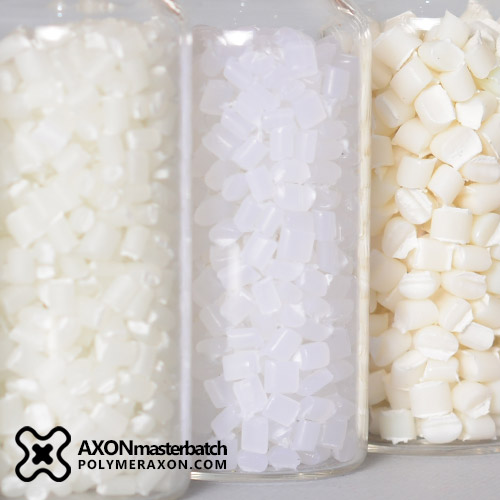
The term “anti static” may be familiar, but its precise meaning might not be. Anti static additives or anti static masterbatch are chemical compounds that minimize the accumulation of static charge in plastic materials. Anti static agents (often in the form of an anti static masterbatch) are used to proactively inhibit the generation of static electricity during the manufacturing of plastics.
What Is Static Electricity and How Does It Work?
To understand the concept of “antistatic,” one must first grasp the nature of static electricity.
Static electricity is a form of electrical charge generated by the contact and separation of two or more surfaces. This interaction leads to the redistribution of negative electrons between the surfaces as they shift from one atom to another, giving rise to static electricity or the static property.
What Are Anti static Materials?
Antistatic materials prevent the buildup of static electricity in substances such as polymers. They achieve this by reducing the electrical resistance on the surface or within the material while increasing its conductivity.
Humidity significantly affects the performance of antistatic materials. Moisture and water molecules help form a conductive layer on the material, facilitating the dissipation of static charges.
What Is Anti static?
Anti static agents are chemical substances that inhibit the generation of static electricity on materials and surfaces. Static electricity, or static charge, can disrupt and degrade the production of quality materials. This charge can be generated by a non-contact voltage source or through the triboelectric effect.
Thanks to their anti static properties, anti static agents make materials slightly conductive by either increasing their own conductivity or drawing moisture from the air.
These agents consist of a hydrophilic component that attracts moisture and a hydrophobic component that repels it. The hydrophilic part reacts with airborne moisture, binding water molecules together, whereas the hydrophobic part interacts with the material’s surface.
This mechanism explains why some moisturizers are used to function as anti static agents .Anti static agents can be used externally or internally. External agents are applied to the material’s surface through spraying or dipping, while internal agents are integrated into the material’s composition and gradually migrate to the surface.
While anti static agents can often address short-term needs, industries require long-term protection to prevent quality problems and the risk of sparks and fires.
As a result, conductive additives such as carbon black, conductive fibers, and nanomaterials are used as enduring antistatic solutions.
Anti static Masterbatch
The anti static masterbatch is a specialized anti static compound used to neutralize static charges on the surface of polymers. Anti static additives can significantly reduce or eliminate problems caused by static electricity, such as dust attraction and equipment damage.
This masterbatch generates an electrical charge that readily migrates across the material’s surface with substantial friction. This process eliminates the impact of static electricity by interacting with ambient moisture. The material’s surface engages with the hydrophilic surface. Moreover, the humidity in the air contributes to a process where water molecules bind together.
Many plastic products must have anti static properties to fulfill their purpose or be user-friendly. This is achieved during manufacturing by mixing anti static additives into the raw polymer to create an anti static polymer. Anti static masterbatch can also be used as a surface coating on the external surface of the product.
Charged plastic surfaces have an affinity for airborne particles, such as dust. It explains the persistent layer of dust often seen on television screens. The anti static masterbatch provides a practical solution and purifies materials from acceptable foreign agents in industrial settings.
Anti static masterbatches are used in varying concentrations, typically between 1% and 18%, depending on the industry’s specific needs. They are available in migratory and non-migratory forms and are designed to manage static charge effectively.
As a result, they provide a valuable means of mitigating a key concern in the handling and packaging electronic components.
Benefits of Using Anti static Masterbatch
- Reduces process time by enabling rapid mold release
- Broadly protects products from dust
- Resolves defects in polyolefin layers and molded products
- Minimizes the effects of electrostatic charge
How Do Anti static Materials Work?
Anti static agents neutralize the effects of static electricity. Contact and separation of materials disrupt the electron balance, generating a static charge. The magnitude of this charge is influenced by factors such as humidity, speed, and the surface area of contact and separation.
An individual in motion accumulates a higher static charge than one at rest. This charge transfer can lead to electrostatic discharge, which is commonly felt as a shock.
Due to their high electrical resistance, anti static materials continuously neutralize electrostatic shocks. These materials protect delicate electronic devices, such as circuit boards, from damage. Depending on the task and sensitivity level, more substantial antistatic materials can be used on the table or floor.
Antistatic materials protect against electrical shocks and lower the risk of slips and fatigue caused by prolonged standing.
To learn more about the types of additive masterbatches, visit the additives page.
What Effect Does Static Charge Have on Anti static Masterbatches?
Antistatic masterbatches act as insulators, allowing various polymers to accumulate static charges on their surface. Static charge accumulation has potential destructive consequences. A few examples are as follows:
• Interferes with the unfolding of layers in packaging
• Causes dust to adhere to food packaging, creating an unsightly and dirty appearance
• Slows down industrial operations, resulting in lower overall efficiency
• Poses a risk to electronic circuits and their constituent parts
• Creates a potential for sparks and ignition, particularly in proximity to flammable materials


Reviews
There are no reviews yet.